Favorite Technical Videos
These are the conference talks and presentations I've watched, ranked by my rating:
Algorithms Demystified
Dylan Beattie
Concepts of algorithms, stories, audience participation.
Keynote: AI is having its moment ... again
Jodie Burchell
AI summers and winters since the 1950s. Connectionism - Turing's projections of intelligence. Symbolism - tiny mental models - build human brain with these small rules. Cybernetics - intelligence through goals and feedback loops - Norbert Weiner. A.I. 'summer' a summer workshop with John McCarthy - term A.I. was a marketing term in the 50's. Perceptron - connectionism - first neural network - single layer networks - couldn't generalize - Minsky switched to Symbolism. Second AI summer - 80's - LISP helped the symbolists - first AI language. Expert systems - 'knowledge engineers' - why is there always a BS title for AI engineers. 1983 - 'AGI is around the corner' - 'jobs will be replaced' - expert systems will replace people. By 1987- expert systems were showing limitations - and expensive -- these predictions are really just SQL statements - too much human context that couldn't be captured into these systems. Unix workstations overshadowed LISP machines. First AI summer - underestimating problem space. Second AI summer- focus on specialization. Our current third AI summer - get generalization capabilities through scale. A USA A.I system beating the world's best GO player made China pivot and invest - more geopolitical races - earlier was Soviets with 2nd AI summer.
How JavaScript Happened: A Short History of Programming Languages
Mark Rendle
Flon's Axiom - for every language, it will be easy to write bad programs. History of computers - basic history - goes through evolution with chart of different languages and what innovations they each had - which ends with javascript. It had good pacing, entertaining.
Effective React: Lessons from 10 Years - Cory House - NDC Copenhagen 2025
Cory House
Fetching went from componentDidMount to useEffect to custom hook to Tanstack query with useErrorBoundary. Good abstractions do things we might forget like caching. Put errorBoundary around more pages so certain components still show. ky is abstraction over fetch, axios over xmlhttprequest. Zod for runtime type validation and form validation. useSuspenseQuery - suspense has fallback to loading message, not just for lazy loading. React server components need frameworks for performance gains on server. Sync engines - convex push model, tanstack db, client store, electric sql. React state has 8 ways - url, web storage, local state, lifted state, derived state, dom refs, context, third party. Use url state, keep local state low level, don't make new useState if state is derived. Make your own form - touched/dirty is derived. useState/useReducer confusing, useRef doesn't render, useContext for data that changes infrequently. This talk will be much less valuable 5 or 10 years from now.
Keynote: Machines, Learning, and Machine Learning
Dylan Beattie
You remember when software doesn't work but get used to the magic when it works. Sometimes non digital - like card board stamp for free drink - works better than app that doesn't work with very small screen. Deterministic outputs, but inputs are chaotic from real life. History of AI or intelligence showing how it peaks then hits plateau despite hype.
Cory Doctorow Discusses Enshittification with Lina M. Khan
Cory Doctorow and Lina Khan
Why tech companies are making products worse. Why the incentives have led them to grow at all costs. Why tech workers should unionize. Cory is such a good speaker, though I've seen him enough now that I hear repeats of anecdotes and jokes.

The Immutable Laws of Software and Life: Code Accordingly
Cory House
Shipley's six dimensions - brevity of code, featurefulness, speed of execution, time spent coding, robustness, flexibility --- these are tradeoffs. First law of ecology - you can't change just one thing. Theorem of software - solve any problem with more indirection (except more indirection). Conway's law - org structure effects results. McLuhan's law - the tools we use shape us. Goodhart's law - when a metric becomes a target it becomes a worse measure. House's law - the metrics that are the hardest to measure are often the most valuable. Hick's law - more options you have slows down decision making. Cunningham's law - fastest way to get feedback is to publicly submit a flawed answer. Diminishing returns - point when cost exceeds value added.
How AI will change software engineering – with Martin Fowler
Gergely Orosz and Martin Fowler
Conversation about Martin Fowlers bio, and covers LLMs somewhat. Kind of a forgettable discussion
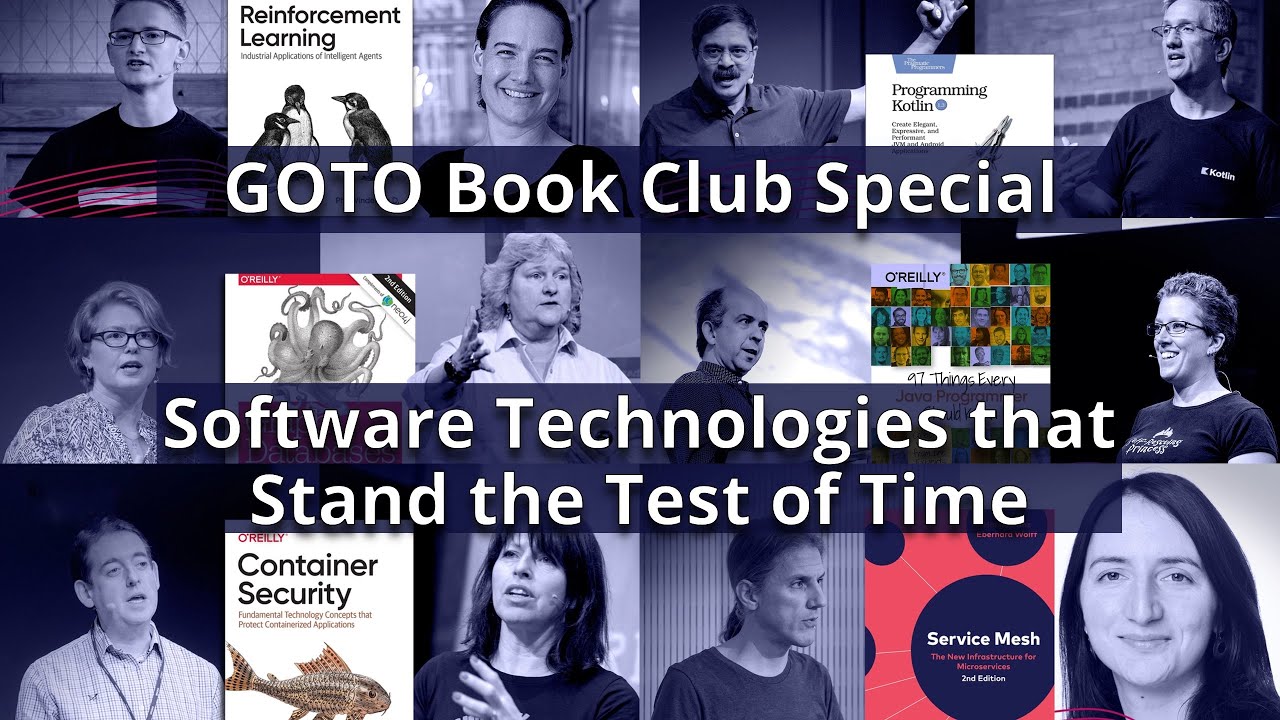
Software Technologies that Stand the Test of Time
Various Speakers
SQL, NextStep, functional programming, Make file, R language, machine learning, monolithic architecture, message-oriented middleware, the programming language. Kinda interesting, but each topic was too surface-level.
2025 in LLMs so far, illustrated by Pelicans on Bicycles
Simon Willison
LLM test - make a svg version of a pelican riding a bicycle - from late 2024 to summer 2025. Cheap AWS nova 'open source' models were not much worse than others? Local models got much better. Claude 3.7 - much better result. GPT 4.5 price went way up. 'bugs' - sycophantic, emailing gov if you do something bad. Unfortunately, this short talk become obsolete quickly.

Enshittification and the Rot Economy: A Deep Dives Conversation with Cory Doctorow and Ed Zitron
Cory Doctorow and Ed Zitron
Enshittification - google query growth slowing down - number go up - so make search worse. Cory was great, Ed rehashed his material poorly, though I do like his newsletters.
What Every Programmer Should Know about How CPUs Work
Matt Godbolt
React is a Beautiful Mess - Advanced React by Nadia Makarevich
Carter and Nathan
Talking about Advanced React book. Talking about how much cognitive load React actually takes. Talking about quirks - refs - anti-patterns - how hard front end coding with event and DOM and user input.